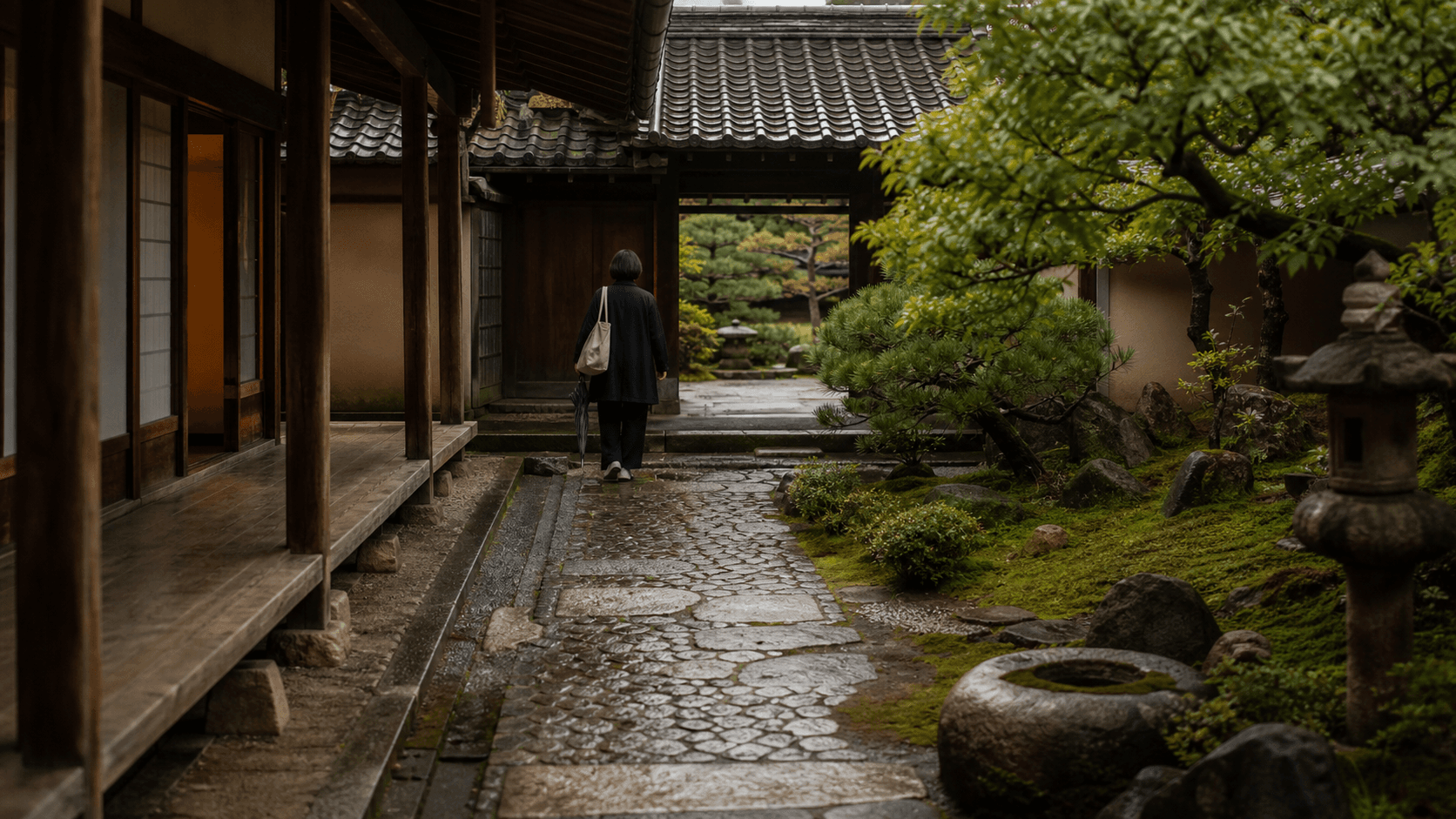
The wellness case for Kyoto starts with the bath. A private onsen or a small ryokan bathhouse, used before the rest of the city is awake, is the fixed point the week is built around — everything else, the temple mornings, the tea ceremony, the garden walk, is paced to protect that stillness rather than compete with it.
We choose a small Higashiyama house with its own bath and garden, hold the early bathing hours and one or two temple visits at opening, and leave the rest of the day deliberately open. The work is restraint: a week in Kyoto that rests is one with fewer things in it, not more, and the advisory job is defending that emptiness against the instinct to fill it.